Precision at the highest level
The key to the success of our company is continuous technological innovation. We have procured our modern machinery and equipment from the world’s leading companies in metalworking. Our skilled operators guarantee high precision in making even the simplest components to the most complex structures.
Sheet metal working and the manufacturing of building services products
At our company, the entire manufacturing process takes place in one place under the control of one business. From purchasing the raw material through laser cutting, bending and welding all the way to powder coating, and then throughout the assembly and the delivery of the finished product, we carry out every operation taking sustainability and environment protection into consideration while also assuring outstanding quality.
Our modern, automated equipment and machinery makes it possible to run series production of large proportions in an economical manner and at reliable quality, while also handling smaller batches and custom-designed products quickly and flexibly. We treat every order with the same precision and commitment.
Our engineering team is at your disposal throughout the process, so that your designs can be realised cost-effectively and without any problems.
Laser cutting
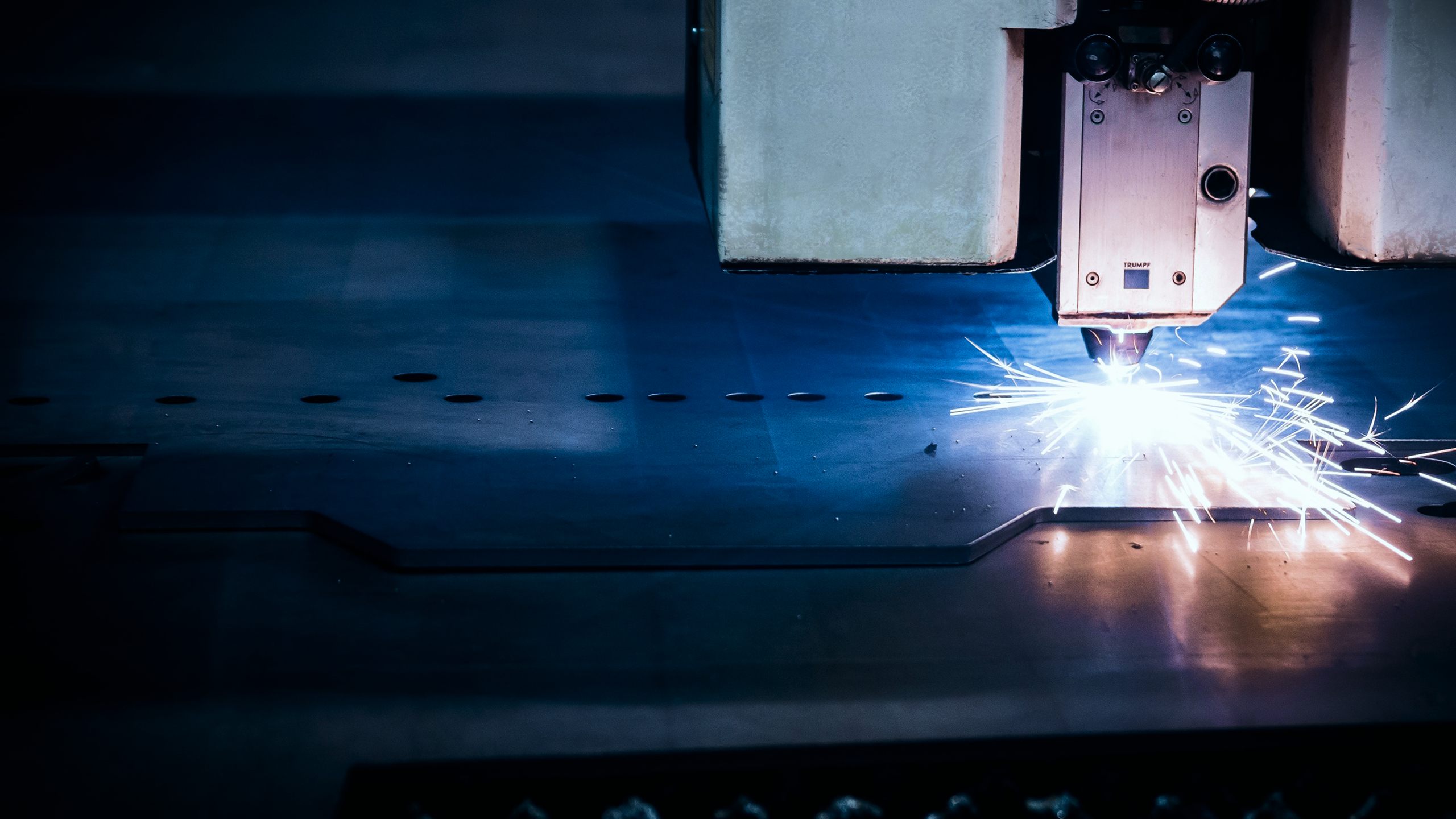
Laser cutting is one of the most innovative processes in modern manufacturing technologies: a beam of laser light is focused into a single point, which enables precise, clean material cutting.
Advantages of laser equipment:
- High quality – a smooth, clean cut surface is produced, making any subsequent machining and deburring unnecessary.
- Minimal distortion – this is due primarily to the extremely small and well concentrated heat input. It results from, among other reasons, the concentrated focus, the small heat-affected zone and the high cutting speed.
- Speed and efficiency
- Accuracy
- Versatility
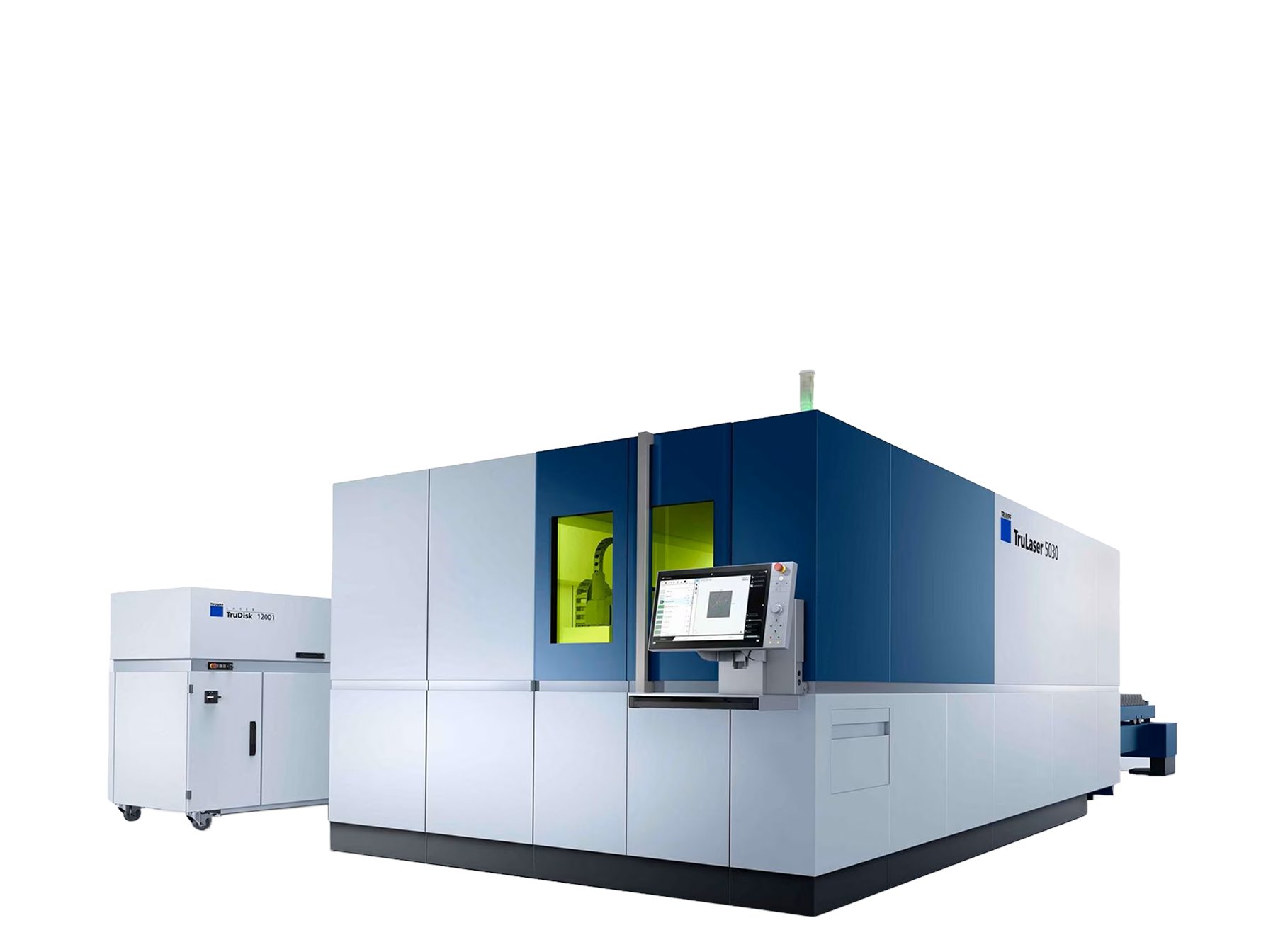
Trumpf TruLaser 5040 (L76)
| Max. working area | 4000 x 2000 mm |
|---|---|
| Laser output power | 6 kW (Fiber) |
Max. sheet thickness:
| structural steel | 25 mm |
|---|---|
| stainless steel | 25 mm |
| aluminium | 25 mm |
| copper | 10 mm |
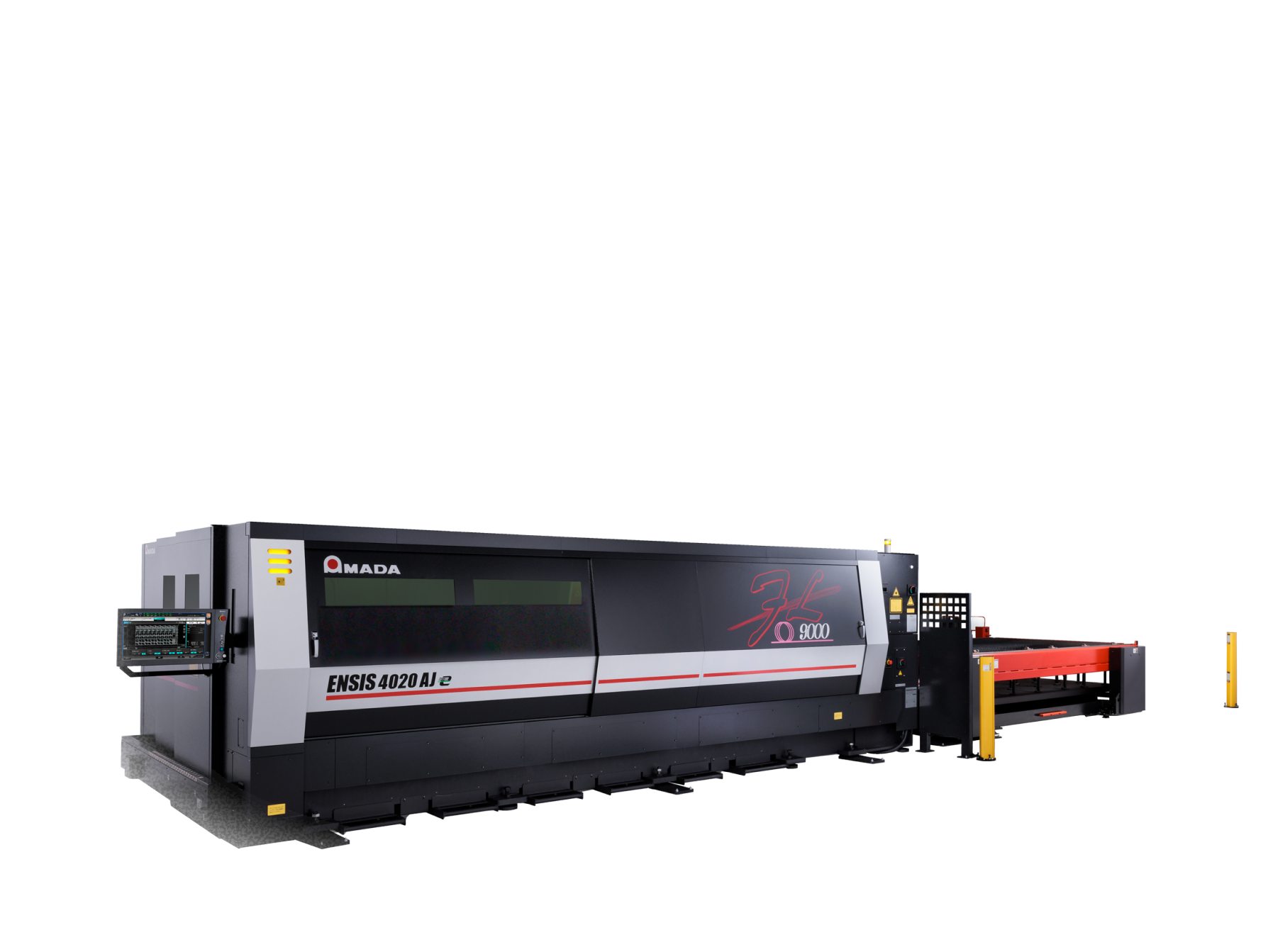
AMADA ENSIS 4020 AJ (6 kW)
| Max. working area | 4000 x 2000 mm |
|---|---|
| Laser output power | 6 kW (Fiber) |
Max. sheet thickness:
| structural steel | 25 mm |
|---|---|
| stainless steel | 25 mm |
| aluminium | 25 mm |
| brass | 15 mm |
| copper | 12 mm |
Punching
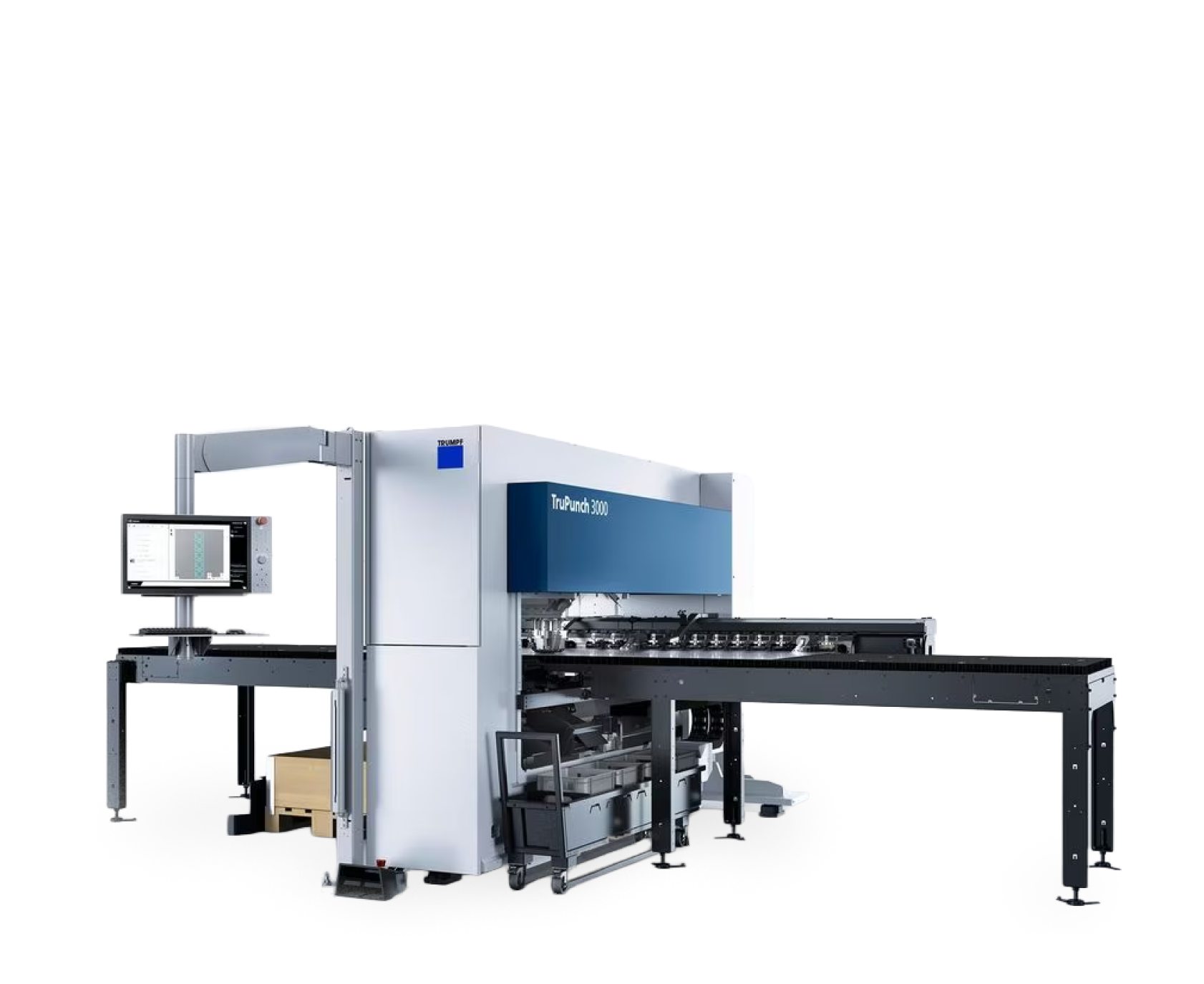
In sheet metal working, punching is a cutting process in which the metal sheet is cut through by means of a single stroke. The individual strokes, which can follow one another extremely quickly, can create different forms in the sheet, for example a round hole. Edge contours can also be machined with punching machines.
Punched shapes are geometrically perfect: a punched hole, for example, is absolutely round. A punching machine works like a paper punch. The punch presses the paper against the support of the punch and finally into a round opening cutting a circular hole during the process. The punched out waste is collected in the container of the punch. Metal sheet punching works on the same principle: the sheet is positioned between the punch and the die. The punch moves downwards and sinks into the die. The edges of the punch and the die move parallel to one another, cutting out the sheet, and thus punching is classified as cutting and punching operations within cold forming options.
The TRUMPF punching technology enables complex, three-dimensional sheet metal working, allowing the entire manufacturing process to be carried out by means of a single machine.
Trumpf TruPunch 3000
| Max. working area | 3000 x 1500 mm |
|---|---|
| Max. sheet thickness | 6,4 mm |
| Punching force | 180 kN |
Automated combined machining
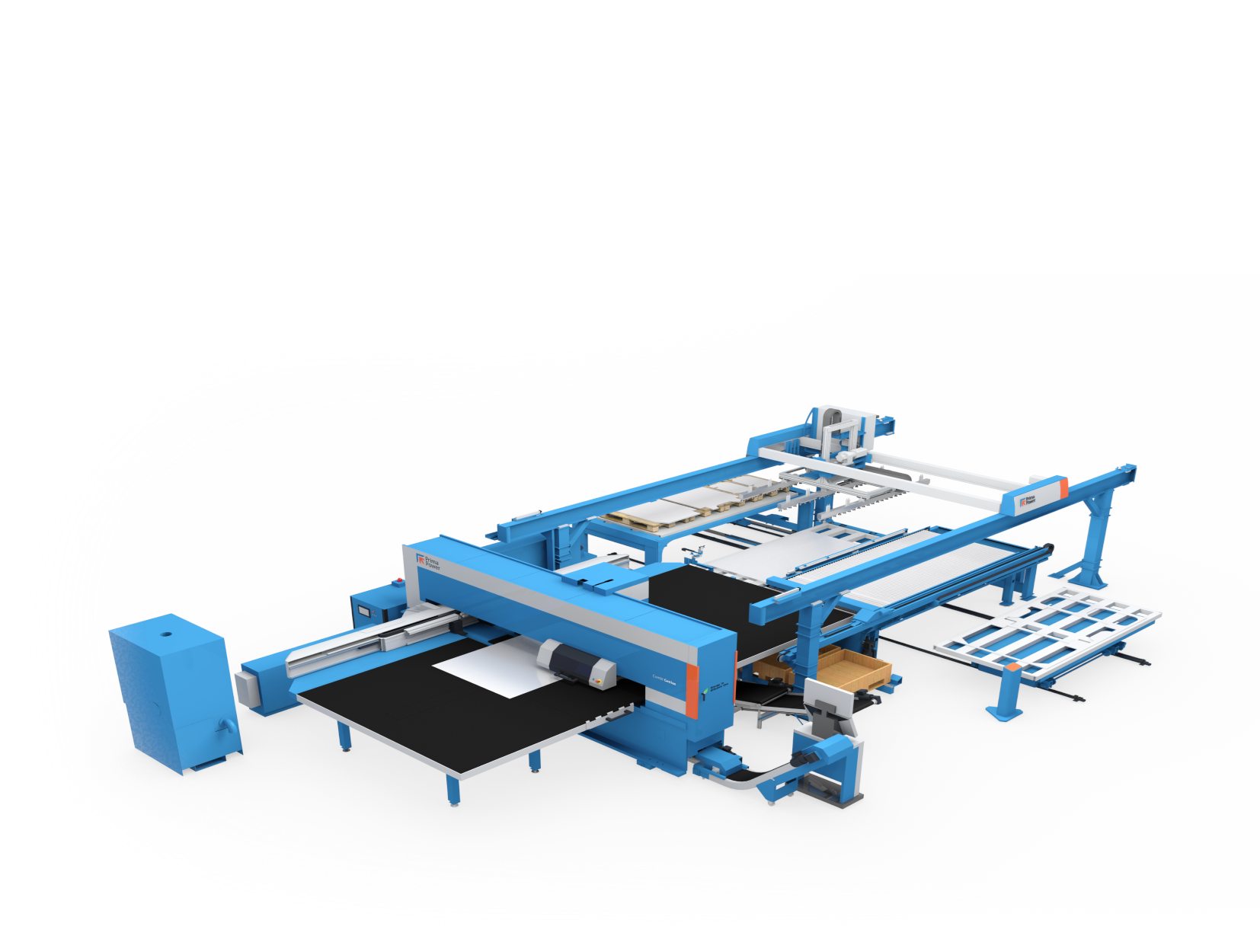
The Prima Power Combi Genius CG 1530 is a top-of-the-range combined punching and laser-cutting machine. It performs the punching and cutting of sheets one after the other in a single operation. It is an excellent choice for manufacturing complex metal parts. Its maximum sheet size is 3000 × 1500 mm. The machine is equipped with a 30-tonne punching unit and a 6-kW laser. Because of its high degree of automation it is also suitable for extensive series production.
Prima Power Combi Genius
| Max. working area | 3000 x 1500 mm |
|---|---|
| Laser output power | 6 kW (Fiber) |
| Punching force | 300 kN |
Press brake bending
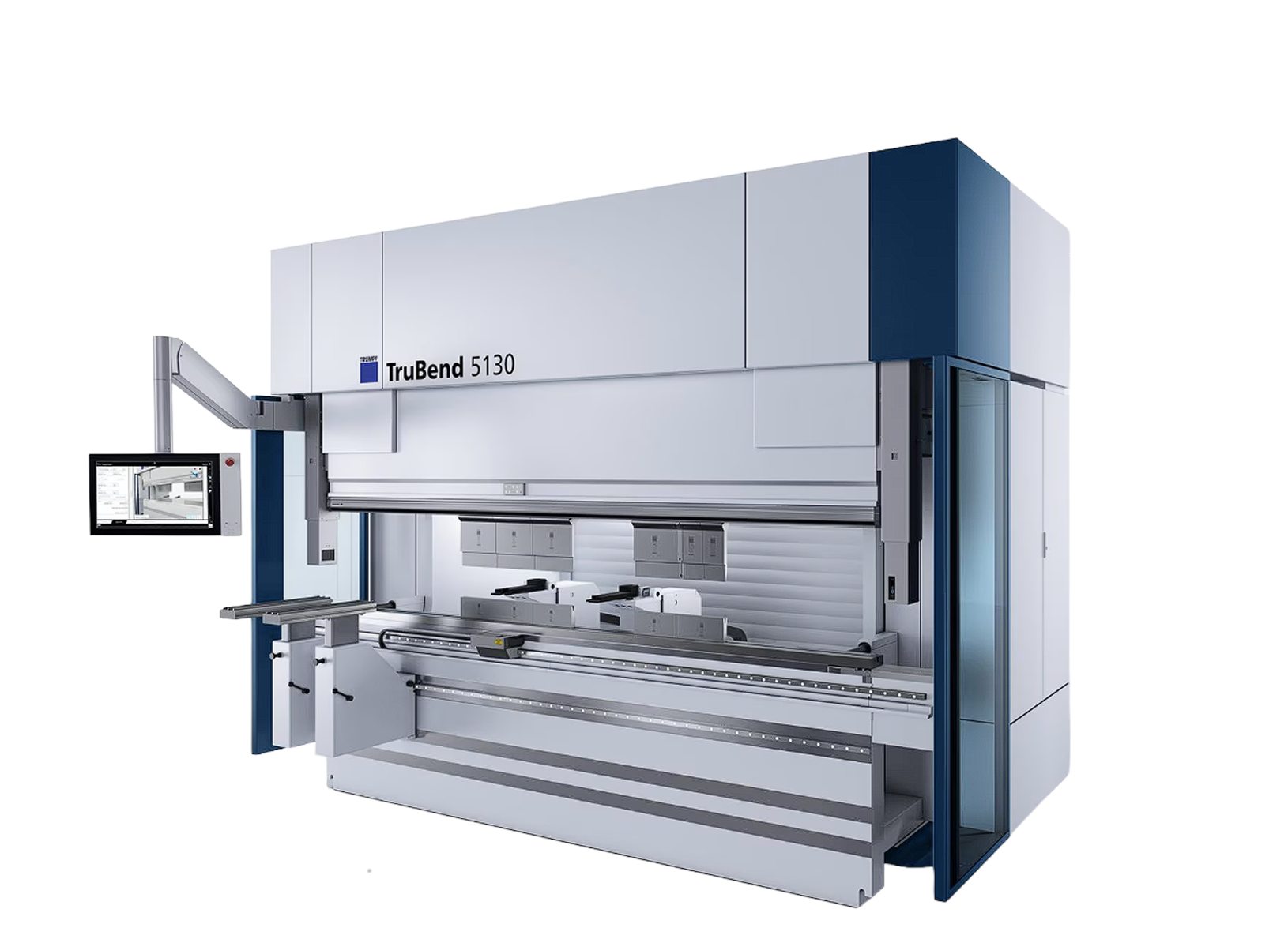
Press brake bending is an essential technology in modern sheet metal working and a fast, efficient way of shaping materials. In the course of the bending process, the punch presses the sheet product into the bending die, which thus undergoes permanent change in its shape. The machines are programmable, so bending operations are repeatable and a single machine can carry out a wide variety of tasks. As a result, both production time and the risk of human errors can be reduced.
- accuracy
- consistency
- versatility
Trumpf TruBend 5130
| Bending length | 3230 mm |
|---|---|
| Pressing force | 1300 kN |
Trumpf TruBend 5170
| Bending length | 4250 mm |
|---|---|
| Pressing force | 1700 kN |
Panel bending
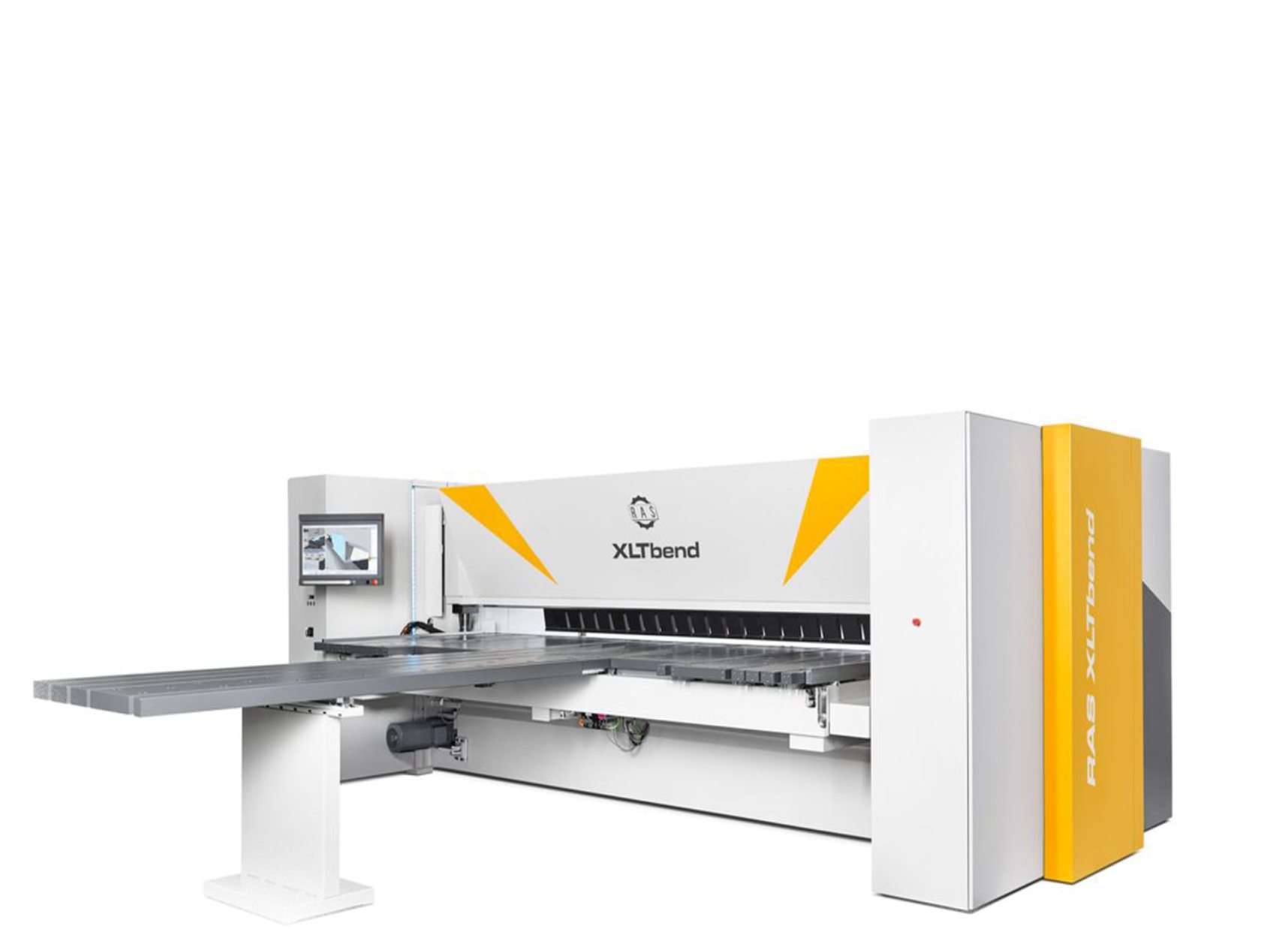
The efficiency of conventional press brakes can dramatically decrease in certain size ranges. In cases of particular geometrical shapes (box-shaped products, for example) the use of a panel bending machine is advisable as a practical choice.
RAS bending centres have been developed with various degrees of programmability and automation for different tasks (for driving profiles, or profiles and boxes/panels), for both thin and medium material thicknesses.
Advantages of panel bending:
- bending large workpieces
- bending of radii
- series bending of parallel edges in one direction
RAS XLTbend 71.30
| Bending length | 3230 mm |
|---|---|
| Max. sheet thickness | 3 mm |
| Box height | 300 mm |
Regarding other workpieces, heights may exceed 300 mm depending on the given geometry.
Welding
Further to conventional TIG processes we also use state-of-the-art laser welding technology for precise, distortion-free seams.
- Laser
- CO
- TIG
- Resistance spot/seam welding